
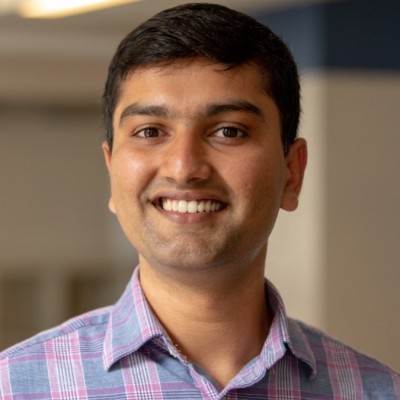
Connect with Rahul on Linkedin
Where I Come From
I grew up in southern India, in a small town in the state of Kerala. Back in the late 90s and early 2000s, over 90% of Kerala’s electricity came from hydroelectric power. In the summer months we had constant blackouts — 30 minutes here, an hour there, throughout the day — because demand was high and water reserves were dwindling. That was just life. We didn’t have air conditioning. Summers ran 100 to 110 degrees with 90%+ humidity. The coldest it ever got was around 70.
I know how hard life is for people that live like that today. Air conditioning is a privilege — and I think the developed world doesn’t always get that. As the world warms, we’re adding cooling at an unsustainable pace. That tension between needing comfort and protecting the planet has shaped how I think about this industry ever since.
How HVAC Found Me
In 2011, I got an opportunity to work on a Department of Energy project at the University of Florida — fully funded, alongside my master’s program. That’s what brought me to the US. The idea was to use commercial HVAC systems as thermal batteries to provide services to the grid.
Through that project we proved it could be done. When buildings on campus were unoccupied, we pre-cooled them down to 65°F. When occupants moved in and grid demand started spiking elsewhere in the city, we’d stop cooling for a couple of hours and let the space drift up to 71–72°F. People stayed comfortable, the building bought the grid time. We proved you can use HVAC as a thermal battery — and we did it before the US grid had the renewables share it does now. The argument is even stronger today.
After UFL I went to Lutron Electronics and did something similar with demand response on the lighting side. Lighting was easier — you can turn loads up and down quickly, unlike HVAC. We rolled that out at marquee sites, including the Empire State Building, with a product called Quantum. After Lutron I moved into the consumer world: a couple of years at a wireless communication startup called goTenna, and then most of my career at SimpliSafe, the home security company. There I led hardware and software platform product — about a hundred people, shipping pretty much everything you’d see on SimpliSafe’s site today.
Why I Started Monaire
In 2023 I met my co-founder, Nish, who has spent his entire career in HVAC. The biggest thing that stood out when we started talking: from 2013, when I left HVAC, to 2023 , the commercial HVAC space hadn’t evolved. Buildings either ran on really old school, unconnected thermostats — or, in the larger properties, on BMS systems that were so complicated almost nobody actually used them.
Meanwhile, the consumer side had completely transformed. Nest had introduced the smart thermostat. Everybody could control their home from their phone. Why had that shift not happened on the commercial side? That gap was the root of everything: excessive energy use, expensive repairs, maintenance pain. And during COVID it had gotten brutal — repair labor was scarce, parts were unavailable, energy prices were climbing.
That’s why we started Monaire. We build AI for commercial HVAC and refrigeration, focused on the commercial space. Customers using our platform typically see 20–30% reduction in their energy and maintenance spend on HVAC.
The Last-Mile Challenge
The hard problem nobody talks about is that maybe only 10–15% of commercial buildings have a connected BMS today. The rest is a wild west — basic thermostats, a few connected thermostats if the Wi-Fi cooperates, and a lot of zero. And then there’s the portfolio problem. Imagine a chain with a hundred retail stores: ten have BMS, fifteen have WiFi connected thermostats , and the other seventy-five have nothing. Every new building added through a different general contractor brings its own control system. Now your facilities team is managing five solutions across one portfolio.
Until you solve that — until you actually connect existing HVAC to the cloud and onto a common platform — the downstream benefits stay locked. Grid services, smarter control, predictive maintenance, fewer part replacements, longer equipment life — none of it is possible without first solving the last mile.
What an Average Service Call Actually Looks Like
We worked with a chain of quick-service restaurants in Florida — under a hundred locations, a lean facilities team of fewer than five people. A restaurant calls in: ‘this HVAC system isn’t working.’ The facilities team takes the call, dispatches the local contractor. The contractor drives 30 minutes, arrives on-site, and doesn’t even know which unit to look at. He talks to the manager — who may not be the person who made the call. So he has to track down who reported the issue. Then he has to figure out which rooftop unit serves that area.
An hour in, he hasn’t touched anything yet. He starts diagnosing off a single sentence — ‘yesterday between 2 and 4 PM the restaurant was too hot’ — and he can’t reproduce the problem. He determines everything’s fine and leaves. Next day the same call comes in. Repeat.
This is the everyday reality. We saw it at a sub-100 QSR operator, and then we saw the same pattern at ten times the scale with a nationwide retail operator. The unit on the roof isn’t connected, there’s no telemetry, no asset history. Everyone is operating in the dark. If a technician could walk up knowing exactly which unit to service — and roughly what’s wrong with it before they even left the truck — they could carry the right parts, get in and out fast, and focus on profitable jobs. The customer pays for the root cause, not the search.
Ideas Are Easy. Execution Is the Hard Part
If there’s one thing I’ve learned across every role — UFL, Lutron, SimpliSafe, and now Monaire — it’s that ideas are easy. Actually executing and delivering the value is one of the hardest things to do. At UFL we built a platform capable of running HVAC as a thermal battery, but going from proof of concept to large-scale deployment was a monumental effort, and it hasn’t really been done at scale to this day. At SimpliSafe we worked on really sophisticated AI cameras — conceptually exciting, brutally hard to ship.
At Monaire, the idea — take a portfolio of buildings, add a smart control layer, connect everything — sounds straightforward. Once you’re in the weeds, you have many different types of HVAC assets, each with different control topologies. Then you have the question of which service providers and technicians are available in which markets, and what they can actually do. Then once you have the data, you have to make sense of it. Execution is the constant challenge. It’s what keeps me up at night. And it’s also what determines who wins.
Strong Ideas, Loosely Held
Personally, I’m a big fan of ‘no ego.’ I try to hold strong ideas loosely. If you tell me my idea is terrible and you explain why, I’ll gladly accept that, pivot, and move on. That’s the only way to build something quickly without falling in love with the wrong answer.
On customers, I’m careful with the word ‘obsession.’ A lot of companies say they’re customer-obsessed. For us, it doesn’t mean low prices. It means going through some pain on our end — working overtime, spending hours analyzing a simple problem — so the customer can achieve their goal. That’s what builds long-term relationships, and that’s where revenue follows.
Mentors
I’ve been fortunate to have great mentors at every stage. The professor I worked with at UFL, Prabir Barooah , was my first. More recently, SimpliSafe’s founder Chad Lawrence has been a huge influence — and he’s now an investor in Monaire, so we’ve stayed close. SimpliSafe’s former CEO Christian Cerda is another. I’ve learned a lot from them — everything from how to be a better person to how to build and scale a company from scratch. I’m a better professional and a better person because of the people who took the time.
Family Time and Time-Blocking
We have a three-year-old. My wife and I spend most of our free time with her. We love to travel — in an ideal world you’d find the three of us at a beach in the Caribbean at this time of year. We were just in Puerto Rico recently. It was amazing.
Balancing this with building a company is hard. The most important thing is that my wife is a great partner and very supportive. The second is that we’ve had a fantastic nanny our daughter adores. The third is that I set personal boundaries. I time-block my calendar. I drop my daughter off at daycare in the morning and I pick her up at 4 PM — much earlier than most parents in tech might. We have an hour and a half together. Once my wife is home, I resume work. Just like meetings, family time gets a slot. It doesn’t always work — sick days throw it off — but most days it does.
The Industry from Here
I think things are starting to shift. The pandemic years made the HVAC industry sit up and realize it couldn’t keep operating the way it had been. But we still have that last-mile challenge — and until we solve it, the bigger opportunities stay locked.
Here’s what excites me. Even in the simplest HVAC scenarios — four packaged rooftop units serving a retail floor, or a VAV system — you’ll often have three units cooling while one is heating because of how the air mixes. We’ve lived with this for decades. With AI and the right connected layer, we can stop units from fighting each other and orchestrate them to keep occupants comfortable while cutting energy use significantly. That’s the future I’m building for.
Advice for People Thinking About HVAC
If you’re starting your career, HVAC is an amazing industry to consider. Three reasons.
First, heating and cooling isn’t going anywhere. The fundamental concept of cooling hasn’t changed in over a hundred years since Carrier, and as the world warms, demand will only grow.
Second, traditional industries like HVAC largely missed the internet era. We’re in the intelligence era now, and there’s a massive opportunity to bring AI into legacy systems. The work is real and the problems are still unsolved.
Third, on the trade side specifically: these are large physical systems that need constant maintenance. The average HVAC technician today is 55 years old. A lot of people are going to retire in the next decade. AI CEOs will tell you the easiest path to becoming wealthy today is to be a plumber or an HVAC technician. The opportunity for someone entering the trade right now is immense.