
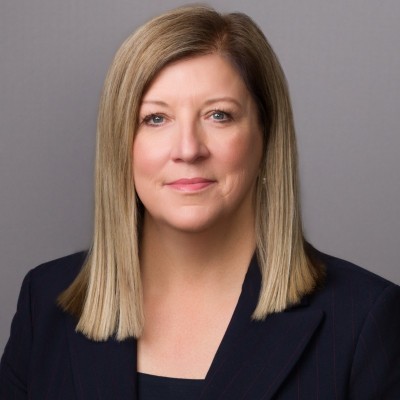
A Different Kind of Beginning
I wasn’t born into HVAC, and I didn’t grow up imagining a career in this industry.
I was born in Bermuda and moved to the United States just before I turned three. My parents are English, and my father worked in support of the U.S. space program during the 60s and 70s. I grew up around Washington, D.C., but my childhood was shaped by movement, by exposure to different cultures, and by being close to technical environments from a very early age.
Some of my earliest memories are sitting at my father’s drafting desk. He didn’t hand me simple tasks—he put me in the middle of his world. Back then, everything was drawn by hand using templates. I probably ruined more than a few drawings, but that experience mattered. It gave me an early connection to technical thinking, even if I didn’t realize it at the time.
Later, I spent four years in Saudi Arabia while my father’s company supported the construction of a naval complex. I lived on that base as it was being built and attended an international school in Jeddah. My classmates came from all over the world. After that, I went to boarding school near London, then returned to the U.S. to finish high school and attend the University of Maryland.
Today, there’s a term for that kind of upbringing—a “third culture kid.” That’s exactly what I was. And I think it shaped how I see people, how I approach business, and how I adapt to change.
Learning the Business Before the Industry
I studied international affairs and foreign language, and my first job had nothing to do with HVAC.
I worked for a trade association representing the consulting engineering industry in Washington, D.C., focusing on policy and trade issues. That role gave me early exposure to senior leadership and to how engineering businesses actually operate—not just technically, but strategically.
From there, I moved into the power industry, joining a consulting engineering firm in Chicago that designed power plants around the world. I worked on international marketing and strategy, supporting global growth.
And then, without planning it, HVAC found me.
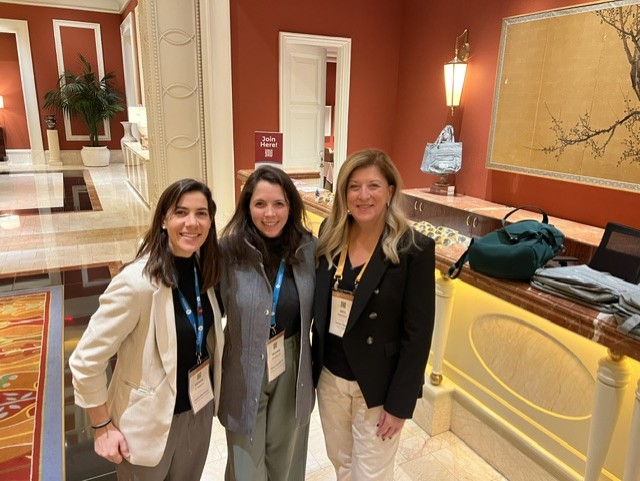
A Career That Found Me
I wasn’t looking for a new job when I got the call from Trane.
They were looking for someone who understood the power industry, especially during a time when deregulation was reshaping the landscape. I took the opportunity, and that decision changed my career completely.
At Trane, I worked in global market development for seven years. I traveled constantly, working with teams around the world to identify new markets, build strategies, and support growth. It was intense, but it was also one of the most formative experiences of my career.
I was also one of the few women in a managerial role at the time, and I came into the organization through a different path than most of my peers. Many had gone through structured training programs straight out of university. I hadn’t. I had to learn quickly, prove myself, and find my own way.
After Trane, I joined Carrier, where I led a major product redesign initiative tied to regulatory changes. We redesigned residential systems across nine brands while simultaneously expanding manufacturing capacity. It was one of the most demanding periods of my career.
What I’m most proud of from that time is something unexpected: as a non-engineer, I was named as a co-developer on 11 patents. That’s not common, and it meant a lot to me.
Choosing the Harder Path
Eventually, I reached a point where I had to make a decision.
I had a good role, a stable career, and a clear path forward—but it wasn’t the path I wanted. After some difficult conversations with my mentor, I decided to start my own company.
Nineteen years ago, I founded AMK—Applications, Markets, and Knowledge.
I created it to fill a gap I had seen in the industry. Companies could get technical expertise from universities or marketing support from agencies, but rarely both in a way that truly helped them grow. I wanted to bridge that gap.
Starting the company was one of the hardest decisions I’ve ever made. Leaving a stable corporate role to build something from scratch is never easy. There were moments of doubt, especially in the early years.
But over time, we grew. We’ve now supported more than 60 companies—manufacturers, distributors, and service providers—across different regions. And in 17 of the last 19 years, including the COVID period, we’ve had year-over-year growth.
Growth Comes With Trade-Offs
The early challenge wasn’t finding work—it was scaling.
At the beginning, it was just me. Then I started bringing in consultants I trusted. Eventually, the business outgrew what I could manage alone.
That led to another major decision: asking my husband to join the company. He had a stable corporate job, and bringing him into the business meant we were both fully committed—with no safety net.
That was a turning point. Once he joined, we were able to grow more effectively, manage operations better, and continue expanding.
Interestingly, I also started the business during a recession. And that shaped how I think about uncertainty.
When markets are strong, companies don’t always look for external expertise. But when things get difficult, they do. That lesson helped us not only survive but stay relevant during challenging periods like the financial crisis and COVID.
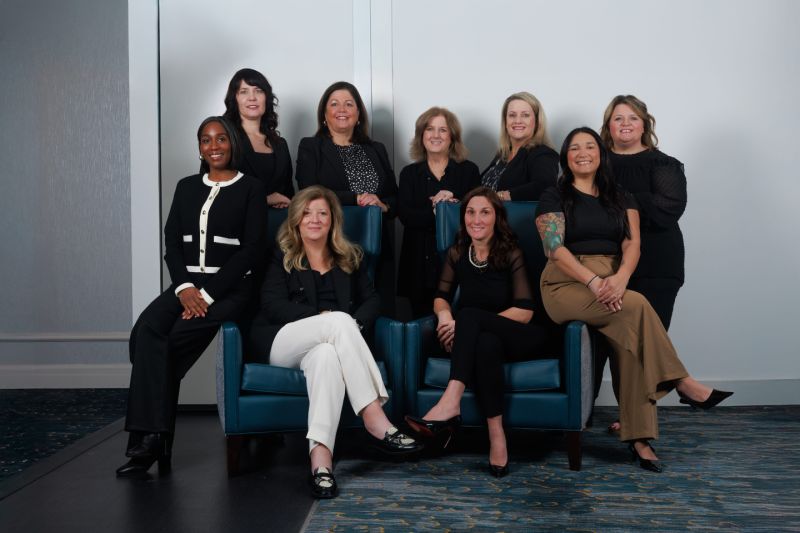
The Role of Mentorship
If there’s one thing that has shaped my career more than anything else, it’s mentorship.
Early on, I had a mentor who saw potential in me before I saw it in myself. He helped me build confidence, navigate challenges, and think differently about my career.
Later, at Trane, I worked under leaders who believed their role was not to control people, but to guide them and remove obstacles so they could succeed. That philosophy stayed with me.
I also went through a leadership program at the Center for Creative Leadership that forced me to confront my own communication style, my blind spots, and how others perceived me. It changed how I lead.
Today, I believe my role is simple: help others succeed. Because when you do that, success follows.
Women, Confidence, and Representation
Being a woman in business—and in HVAC—has come with its challenges.
Early in my career, there were still assumptions about whether women were truly committed to long-term careers. I experienced that. But I also focused on building my knowledge and contributing wherever I could.
Today, I see progress. But I also see that women often need different types of support.
In my role as president of Women in HVACR, I see how important mentorship, visibility, and confidence are. Women are less likely to pursue opportunities unless they feel fully qualified. They need role models. They need to see what’s possible.
And they need environments that support how they develop—not just environments built around traditional expectations.
If we’re serious about addressing the workforce gap in HVAC, we have to bring more women into the industry. And that starts early—helping young people understand what opportunities exist and how their skills can fit into this field.
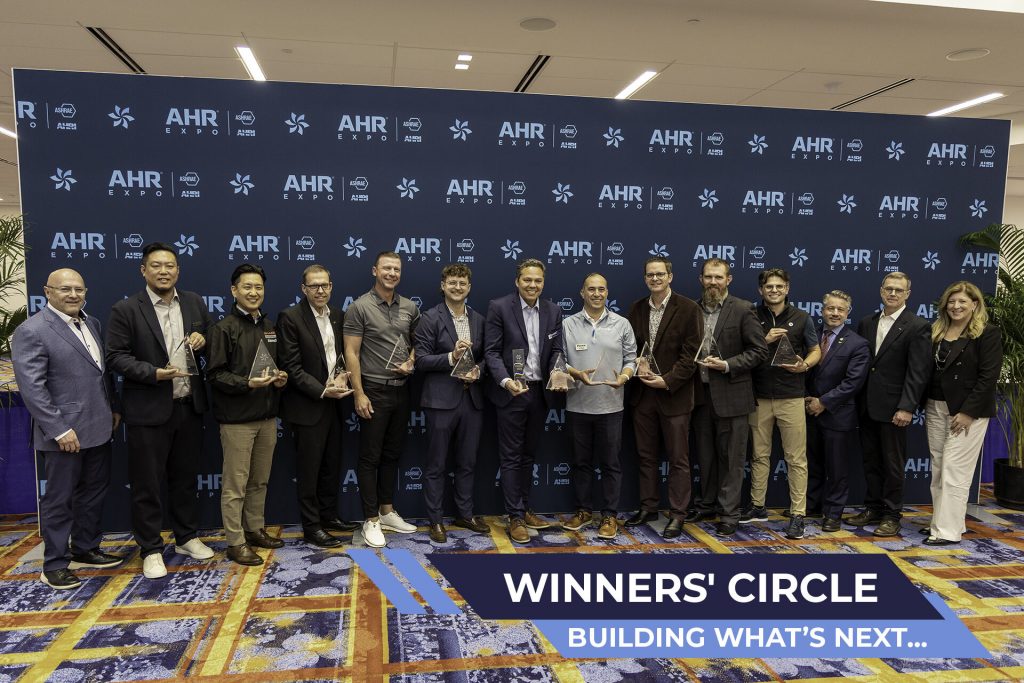
Where the Industry Stands
What I love about HVAC is its commitment to improvement.
There’s a real focus on efficiency, performance, and sustainability. The industry is constantly trying to solve problems—even ones that customers haven’t fully identified yet.
But we still struggle with how we bring solutions to market.
Too often, we follow the same traditional paths, which slows adoption. We rely on validation instead of trusting our own knowledge and innovation. And we sometimes forget that the most important decision-maker is the building owner or homeowner.
There’s progress happening—but there’s still room to move faster and think differently.
Redefining Balance
For most of my career, balance was something I struggled with.
Running a business makes it hard to disconnect. But over the last few years, I’ve made conscious changes.
Spending more time with family—especially my mother—helped me reset my priorities. I also realized I needed to take better care of my mental energy, not just my time.
Simple changes made a difference. Turning off work in the evenings. Taking real vacations. Creating space to rest.
It’s not perfect, but it’s better.
Beyond HVAC
If I weren’t in HVAC, I think I’d be in private equity. I enjoy the challenge of strengthening businesses and finding ways to make them more effective.
Or I might be in the culinary world. I love to bake—it’s something I’ve done since I was young. It’s creative, detailed, and personal.
Final Thoughts
If there’s one piece of advice I would share, it’s this:
Do what you love.
Because when you do, everything changes—your energy, your mindset, your impact.
And if you’re building a team or leading a company, start with mentorship and coaching. Build people first. Because sometimes the biggest breakthroughs don’t come from new products or new markets—they come from focus, alignment, and people who believe in what they’re doing.