
Connect with Corbett on Linkedin
Before I Ever Touched HVAC
I did not come from a trade family, and I did not start out in HVAC.
My previous career was music. I made up music for dancers, and I got to travel as part of that. It was a fun life in some ways. I had a really good gig improvising music for college dancers when I was in my twenties, and for a while that felt like enough. But after a while, anything gets old. I was making about $25,000 a year, and at some point I realized I needed a different path.
The idea that changed everything came from a family member. They said they wanted someone they could bring into their house who would just look at everything and tell them what was really going on. Not a window person trying to sell windows. Not an HVAC guy trying to sell HVAC. Not an insulation guy trying to sell insulation. Just one person who could answer questions and give straight answers about the house.
I remember thinking, that is actually not a bad idea.
So I looked into it, and that is how I found my way into this work.
From Music to Diagnostics
I became a HERS rater first. I wanted some letters behind my name, like a lot of people who come into a field from the outside. HERS certification gave me a way to work in modeling and analyzing new homes. After that I found BPI, the Building Performance Institute, and I got certified for existing-home troubleshooting and combustion testing. Then I became a passive house rater and kept collecting trainings.
But honestly, a lot of my education came from asking questions.
I leaned heavily on individual people who really knew what they were talking about—or at least seemed to—and who were willing to share what they knew. Not everybody was. When I first started, there were definitely people who were not interested in giving away their secrets. So when I found people who would work with me one-on-one, I took full advantage of that.
I also started a podcast through our YouTube channel, Home Performance, and that became another way to learn. I would sit down with people I admired and ask them an hour’s worth of questions. The interviews were for the audience, of course, but really they were my questions. That was part of my training too.
What helped me most, though, was that I came into the field as a total beginner. I did not know what a plenum was. I did not know what a truss was. I did not know the words I was supposed to know, which meant I was free to ask whatever I wanted. That turned out to be a superpower.
When you grow up inside a tradition, you sometimes inherit the answers before you ever examine the questions. I didn’t have that problem. I could ask anything. And eventually I started noticing that sometimes I would ask a question in a room full of experts and realize that nobody knew the answer. They all had the same question, but they couldn’t ask it. I could.
What I Actually Do
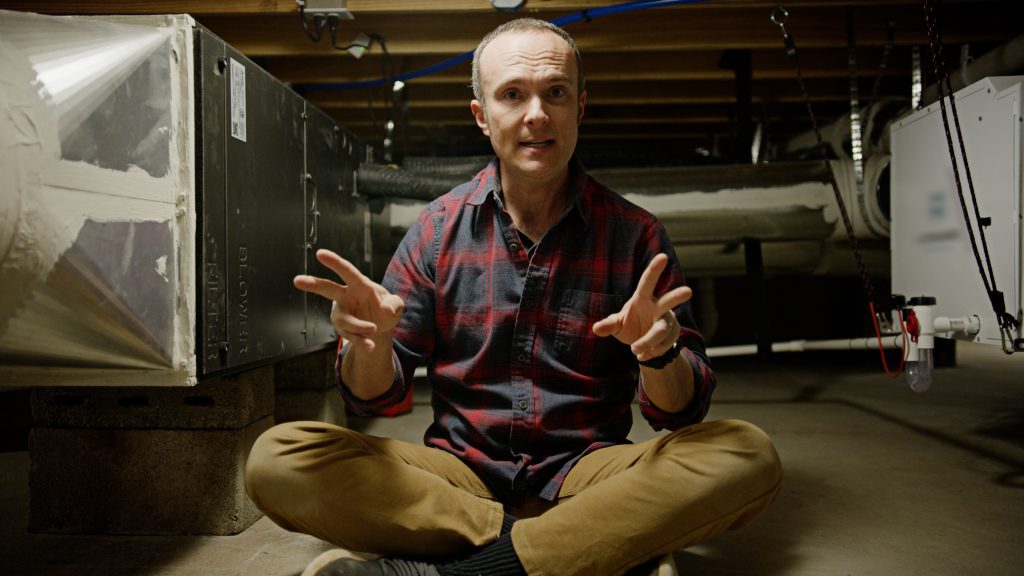
I came into HVAC through enclosure testing: air-tightness testing, insulation inspections, infrared scanning, that kind of work in homes.
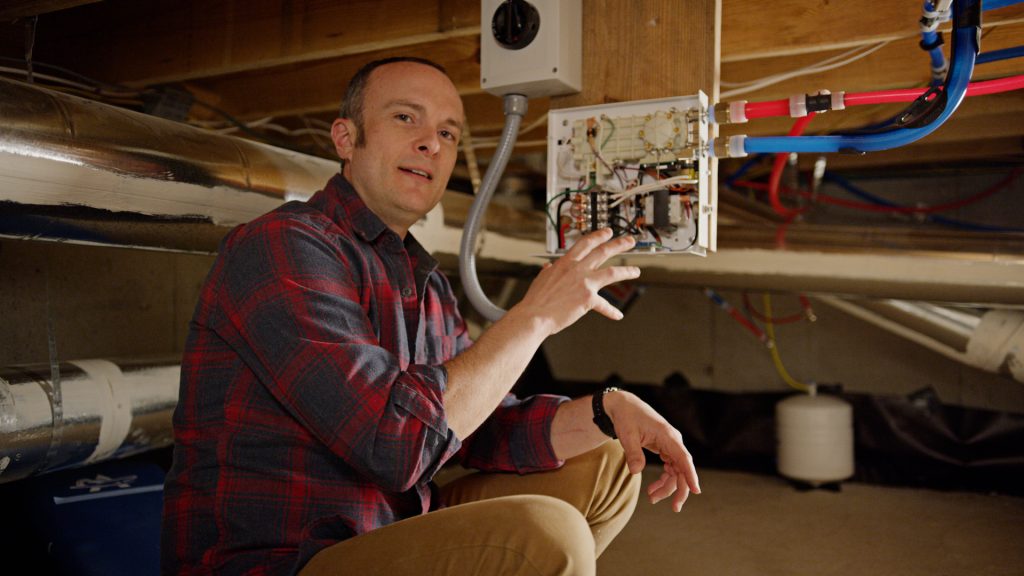
Right now I work in residential. I advise on new construction, I design HVAC systems, and I troubleshoot existing homes by testing them and figuring out what is causing weird dynamics—moisture problems, mold, funny smells, comfort issues, all of that.
That is the part I care about most: not just what gets installed, but what happens when you turn everything on.
A lot of HVAC proposals are basically a shopping list. We will install a heat pump. We will install ductwork. We will install exhaust fans. That list matters. You do need to know what goes into the house. But what I specialize in is what happens after that, because a home is dynamic. Everything is changing all the time.
That is what fascinates me.
I carry instruments into people’s homes and use them to test physics, chemistry, and microbiology so I can help people understand what their house is doing right now and what to change if they want it to behave differently. That is the work.
The House Is Not Static
One of the most important things I have learned is that a home is a system, not a pile of products.
I see people make huge decisions about their homes without any meaningful data. I was just in a house where someone thought they needed to rip all the spray foam insulation out of the attic because they believed it was causing the problem. It wasn’t. I stopped them from spending tens of thousands of dollars on a change that would not have solved anything.
We use a medical analogy all the time because it fits. If you go into a doctor’s office and say, “My tummy hurts, please take out my appendix,” a good doctor is not going to start surgery. They are going to take vitals, ask questions, run tests, and figure out what is really going on. But that is basically what happens in houses all the time. “My house is uncomfortable, please replace all the windows.” That is not diagnosis. That is guessing.
And if I could boil my work down even further, I would say this: I am trying to help people understand that buildings are alive with relationships.
The air around us is doing chemistry all the time. Air pressures are shifting. Moisture is moving. Heat is moving. Microbes are cycling through life and death. People spend 90% of their lives inside enclosed spaces, and especially in their homes, yet most people still make decisions about those environments with almost no useful information at all.
That is why testing matters.
Telling Better Stories
About half of my job now is telling a story people can absorb.
HVAC can get complicated very quickly. There are thermostats, inverter systems, expansion valves, all kinds of components and technologies. But if you are trying to explain that to a homeowner or even to a professional who is overwhelmed, the technical list is not enough.
What people need is a story they can understand.
I think about HVAC as a set of barriers, heat exchangers, airflow paths, and filters. Those are the Legos. You take those pieces and put them together differently depending on the situation. If a normal person can understand that, then they can start asking for better things. And when customers start asking for better things, professionals have to learn how those things work.
I have also learned from chemistry researchers that if someone cannot explain something simply, there is a good chance they do not really understand it themselves. That idea stayed with me. If you can explain it to a third grader, you understand it.
That is a goal worth having in this trade.
Community, Not Silos
I believe very strongly in community now.
When you first start, you need people. You need places where you can absorb information, ask hard questions, and realize you are not the only one trying to figure this stuff out. That is part of why I go to groups like BS and Beer, where people in building science get together, share ideas, challenge each other, and learn from each other in public.
Now that I have been doing this for 18 years, I go because I remember what it felt like to be one or two years in and to not even know what I did not know. I also remember the frantic feeling of needing answers and not knowing where to turn.
We need more of that community, not less. The world already has enough silos.
Two Stories I Still Tell
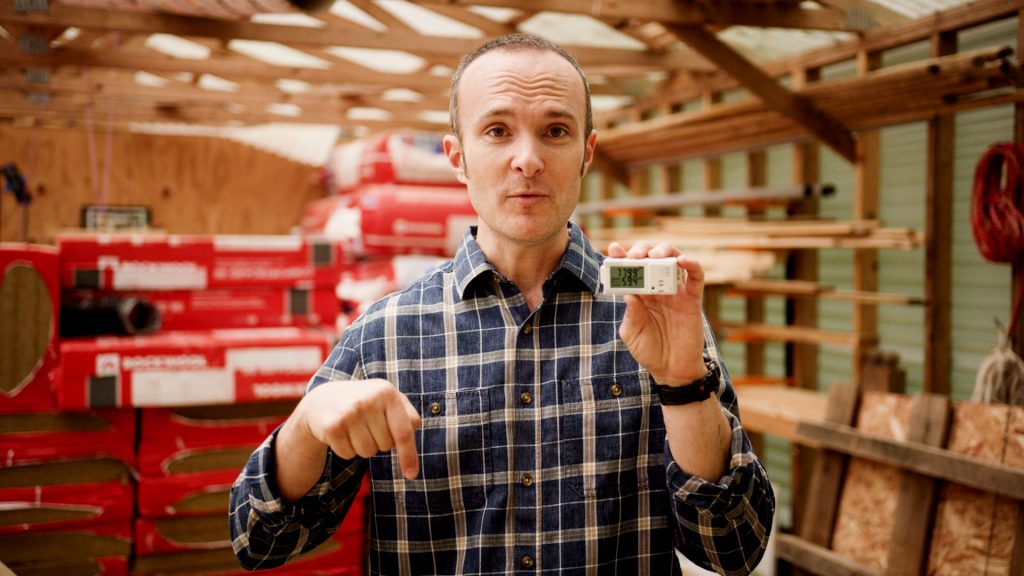
One of my favorite field stories is from a small commercial job where I was hired to verify ventilation on a single exhaust fan. I went out there with sophisticated tools, put one into the airflow, and it said the fan was not running. But I could feel the fan running. So I assumed the tool was broken. I tried another one. Same answer. I disbelieved three separate pieces of equipment before I finally had to ask a much stranger question: was it possible the fan had been installed backwards in the factory?
It was.
That story stays with me because I am a testing person, and even I was skeptical of the test results. It helped me understand just how much stronger the story has to be when you are talking to someone who is already suspicious of testing.
The other story is about our tiny house on wheels. My family lived in a 200-square-foot tiny house for five years. We toured with it and used it to teach people building science. If I invited people to come learn building science, they were not interested. If I invited them to tour a tiny house that I lived in with my baby and two cats, they said yes. So that became our way in.
We built that house with my dad, who is not a builder, and I remember telling him, “Today we are doing continuous insulation,” or “Today we are installing the ERV.” And he would say, “Are you sure we want to do that?” Even as someone talking about these ideas publicly, I would fold right away and think, maybe it is a terrible idea.
That experience helps me coach homeowners now. A lot of them become the CEO of the performance of their own home. They hire the builder, the HVAC person, the architect, me, and everyone else, and then they spend months being told by different professionals that what they are trying to do sounds weird or wrong. Sometimes what they need most is not another detail. They need someone to say, yes, you are still on the right track.
What the Industry Gets Right—and Wrong
I think one of the best things happening in the trades, and especially in HVAC, is that the tools are getting cheaper and better.
When I started, my first infrared camera cost $5,000. Now a camera with similar quality costs a fraction of that. That means people can verify performance, find problems, and diagnose homes much more effectively than before. That is real progress.
What we are still getting wrong is that many HVAC professionals still do not fully understand that even a perfectly designed and perfectly installed system cannot perform properly if the enclosure is wrong.
If the house is not airtight enough, or the insulation was done badly, or the rooms are too leaky or too tight, the HVAC system gets blamed for problems it cannot solve. Warm air rises. Wind creates pressure. The enclosure matters. Until we really act on the idea that the home is a system, HVAC contractors will keep taking blame for failures that are not actually theirs.
That is why I think testing the enclosure is so important. Once you have the data, the argument changes. Information wins.
Music, Marriage, and the Way I Think
Two things have shaped the way I work more than anything else: my wife and my background in music.
My wife is the person with the ideas. She started the YouTube channel. She had the idea for our television series. She has pushed me toward a lot of the things I do, including trainings and public-facing work. Being married to someone who is in it with you and thinking deeply about all of it has been huge.
Music shaped me too. I think it taught me to see relationships and sequences in a way that applies perfectly to buildings. In music, harmony is about relationships outside of time. Melody is about sequence and consequence. In homes, I think about both. How one system relates to another even if they are nowhere near each other. How one event triggers another, which triggers another. I really do think about the music of the building.
Work, Family, and a Smaller Business on Purpose
Balance is hard. I am an American, so yes, huge problem.
Part of why we are moving to Spain for a year is to discover what quality of life is supposed to feel like when you slow down and actually live. Right now, I work from home. I do not have an office. I do not have employees or subcontractors. I answer my own phone. My cell phone is the business phone.
That setup is partly because I am a control freak, but it is also because I have chosen a kind of work that is not scalable in the usual business sense. It depends on me, on what is in my brain, and on the particular way I think. I do Zoom consults, remote design work, and direct troubleshooting for people. I have made a living for my family that way, and I do not think there is any shame in that.
In fact, I think more people in this trade should consider small, personality-driven businesses a strength, not a weakness. If you are a one-person shop and people come to you because of how you think, how you explain things, and how much you care, that is real value.
What Matters Most
If I have any free time, I have three little kids, so that is the answer.
Music is still there, but mostly hanging on the wall. I play when I can. But the reality is that I work late sometimes because people are asking me directly for something I promised them, and I do not want to let them down. Then I get my kids up early for school and do it again.
That is part of why we are looking forward to Spain. A different schedule. A different pace. Maybe a little more room to breathe.
What I Would Say to Someone Starting Out
If I had to reduce all of this to one idea, it would be this: listen.
When I got into this work, I thought it was about sustainability or energy efficiency. But pretty quickly I learned that most clients do not care about that in the abstract. They care about their home feeling better, being healthier, having fewer mold problems, and making the rooms feel the same. My idea of what I wanted to do was not the same as their idea of what they needed help with.
That taught me something important. The purpose of a system is what it does. You can start a business thinking you are one thing, but if enough people keep coming to you for something else, maybe that is what you actually are.
So listen. Know yourself. Pay attention to what people are really asking for. And then use your own particular way of seeing the world to help.