
Connect with George on Linkedin
Growing Up Around the Trades
I grew up in Queens, New York City, in an area where a lot of the people around me were Italian, and many of them were plumbers or part of the union. That was the environment I was surrounded by. It was very common to see people working in the trades, even if I wasn’t directly part of it myself at the time.
Before HVAC came into the picture, I was working at Verizon Telecom as a customer service representative. It was a typical office job, sitting in a cubicle, doing a 9-to-5. There was nothing in my day-to-day that pointed me toward this industry.
An Accidental Start
My path into HVAC was completely accidental.
A friend of mine was working for a developer on two large buildings in Brooklyn, and he needed help sourcing PTAC equipment. He was having issues with suppliers and vendors, and he asked me to take a look and see if I could help.
At the time, I didn’t even know what a PTAC was.
I took the specs, started searching online, and figured it out step by step. Eventually, I found the equipment he needed. Then came the moment that changed everything. He told me he couldn’t just pay me as an individual, but he could pay a company. So he told me to go set one up.
I followed exactly what he said. I created a company, went through the process, and he wrote me a check.
I remember thinking that this was more money than I would make in a couple of years at my job. That’s when I realized there might be something here.
At the same time, I was told something important early on: this isn’t your job yet. It’s a hobby until it produces enough to replace your income. That stayed with me, and I treated it that way in the beginning.
Finding Opportunity in Brooklyn
At that time, my office was in downtown Brooklyn, and that played a big role in how things developed.
That area has a lot of historic brownstones and townhomes, and I didn’t fully realize it at first, but that’s a very difficult market for HVAC. Retrofitting systems into those homes usually involves a lot of construction and cost.
During my lunch breaks, I started walking around and talking to homeowners. I printed cards and introduced myself, just trying to understand what problems people were dealing with.
A lot of them were saying the same things. It was expensive. Nobody had good solutions. It was complicated.
Coming from Hong Kong, ductless systems were something I was already familiar with. They’re very common there, and we don’t rely on ductwork in the same way.
So I started suggesting that approach.
Most people hadn’t even heard of it as an option for their homes. That became the connection point for me—bringing something that was normal in one part of the world into a situation where it made sense but wasn’t being considered.
That’s how I started finding my place in the industry.
Learning Without a Traditional Path
One of the biggest challenges for me has been that I didn’t come from the truck.
I didn’t start out going into customers’ homes, diagnosing issues, or doing installations myself in the same way many people in this industry do. That creates a gap.
There are times where something looks straightforward on paper, but when you’re actually in the field, dealing with real conditions and a homeowner watching everything you do, it’s very different. That’s something I’ve had to learn to understand and respect.
At the same time, I did have a technical background before HVAC.
I was studying IT and networking and had worked toward Cisco certification. That experience helped me understand systems, controls, and how different components interact. I was already used to reading technical documentation, and I was able to apply that way of thinking to HVAC.
A lot of my learning in the beginning was self-driven. I didn’t have a direct mentor guiding me. I was searching online, watching videos, learning terms, and trying to understand how everything worked.
Over time, I also found industry groups and communities where people share knowledge and help each other. That’s something that really stood out to me.
Building Mr. Air NYC
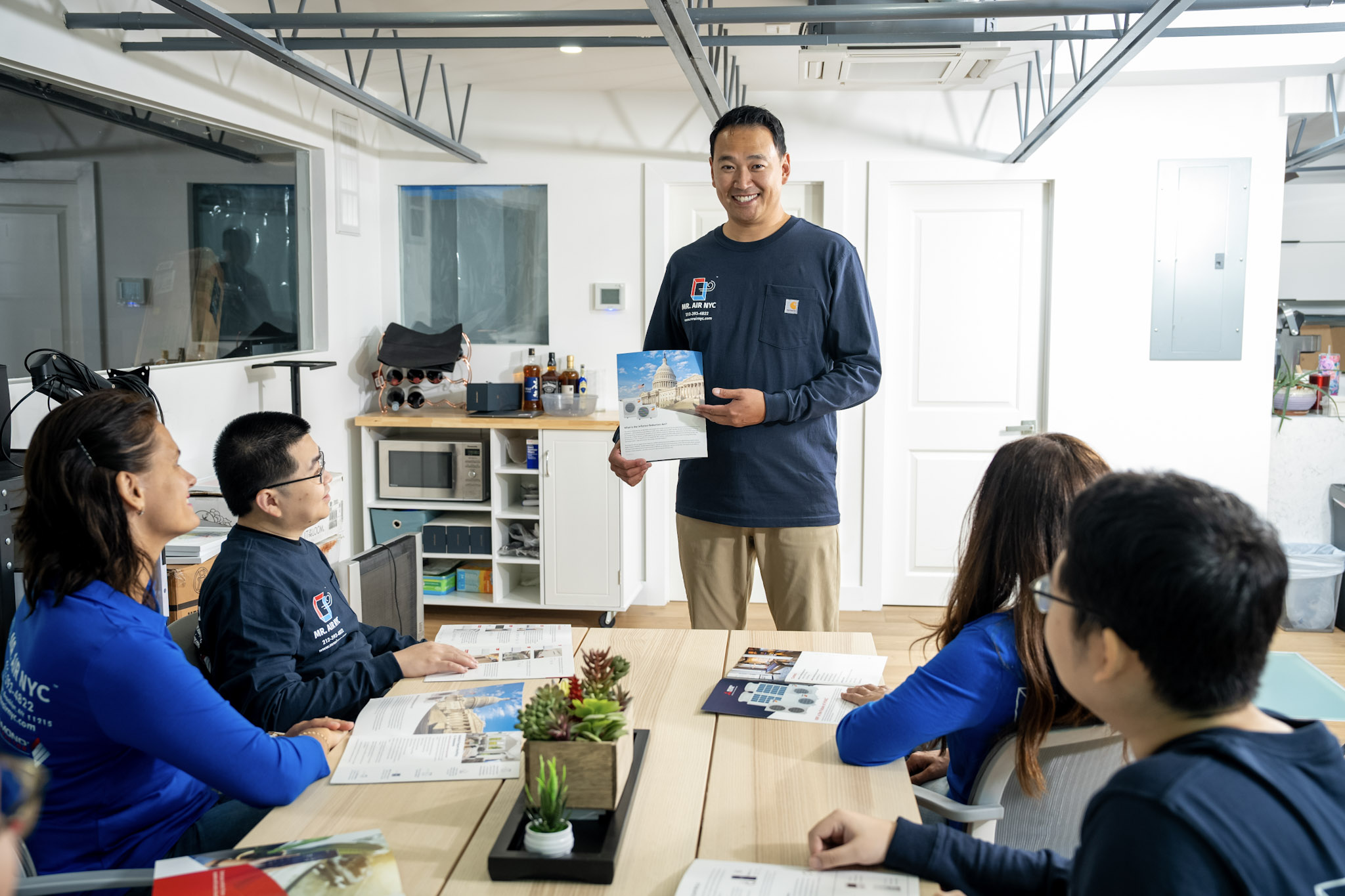
Today, I run Mr. Air NYC.
The name comes from a mix of influences. Part of it relates to how names and titles appeared on documents from Hong Kong during the British colonial period, and part of it is tied to New York itself. Even the colors in the logo are based on local baseball teams, so it feels connected to the city we work in.
Right now, we have about 15 people on the team, and we’re continuing to grow.
My role is focused on managing the team, making sure everyone has the resources they need, and maintaining a consistent level of quality across the company.
One thing I brought from my time at Verizon was the idea of being process-driven. I was exposed to structured systems like ISO processes, where everyone follows the same standards to maintain quality. That’s something I’ve applied here.
We try to make sure people aren’t guessing. We have processes in place so work is done consistently.
What the Industry Taught Me
One thing that surprised me about HVAC is how much people care.
This isn’t a simple trade. It requires understanding building science, airflow, electrical systems, and how everything works together. It’s a lot more involved than I expected.
Another thing that stood out to me is how willing people are to help.
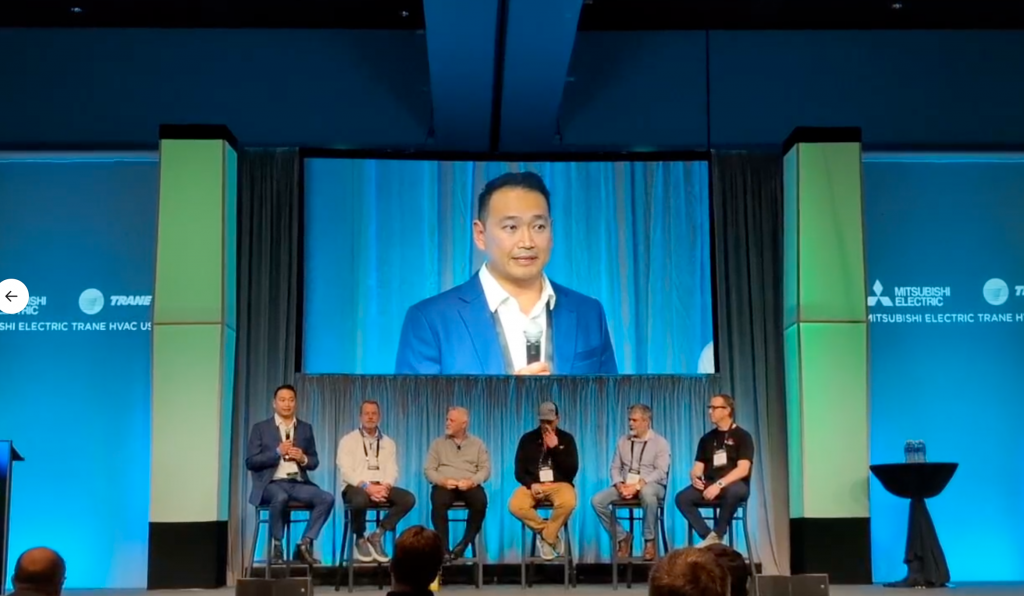
I didn’t have one specific mentor, but I’ve had a lot of people help me along the way. Whether it’s manufacturers, other contractors, or people in industry groups, there’s a willingness to share knowledge.
I remember working on a project where a customer wanted to use a zoning system, and I reached out for help. The response was immediate and open. That kind of support made a big difference for me early on.
Setting the Standard
In the early days, because I didn’t have as much hands-on technical experience, I focused on what I could control.
I made sure the job sites were clean. I vacuumed, wiped everything down, and made sure the house looked good when we left. That became part of how I approached the work.
Customers noticed it.
Construction can be stressful for homeowners, and I wanted to make sure we respected their space as much as possible.
That mindset carries into how we operate today.
If we make a mistake, we take responsibility. We make it easy for customers to reach us, whether that’s by phone, email, or text. We respond quickly and make sure issues are addressed.
We don’t try to avoid problems. We deal with them.
Every installation we do includes maintenance, because we want to maintain a relationship with our customers over time.
Culture and Community
My background has influenced how I approach the business.
Being originally from Hong Kong and growing up around Italian communities in New York, there’s a strong sense of community in both cultures. People look out for each other and stay connected.
That’s something I try to bring into the company.
We’re not just there to complete a job and leave. We want customers to feel like we’re there for them long term.
The Reality of the Work
This job also comes with real challenges.
I’ve seen situations where the problem goes beyond HVAC. For example, we were called into a home where another company had installed a system, but the house itself had major issues. It was poorly maintained, there were broken windows, and there were hazardous materials in the basement that had been disturbed.
At that point, the issue wasn’t just about the HVAC system. There were bigger concerns that needed to be addressed.
There are also moments that are more unexpected.
I remember hearing stories about customers who wanted extremely specific temperature conditions, and I didn’t think those situations were real. Then I had a customer who wanted a room to be maintained at 59 degrees and monitored it closely with thermostats.
That was a learning experience on its own.
Balancing Work and Life
Work is important, but so is balance.
I try to be home for dinner with my family around six o’clock whenever I can. If I miss time in the morning, I try to make it up later. I also encourage the people on my team to take time off and be with their families.
You only get that time once, especially when your kids are young.
I don’t want to build a company where people feel like they can’t step away when it matters.
Resetting and Staying Focused
When I need to reset, I go mountain biking.
It forces you to focus completely. You can’t let your mind wander, because if you do, you’re going to hit a tree. It’s a way to clear everything else out and just be present in the moment.
Being out early in the morning, in nature, with no distractions—it helps reset everything.
Advice for the Next Generation
If I had to give advice to someone entering the industry, it would be simple: get involved.
Talk to people. Ask questions. Join industry groups. Go to events. There are a lot of resources available now, and there are a lot of people willing to help.
That’s something I’ve experienced firsthand.
You don’t need to have everything figured out at the beginning. What matters is that you’re willing to learn and take the time to understand the industry.
That’s how I started, and that’s what helped me build where I am today.